

The spotlight on women’s sport has never been brighter. From packed stadiums to record-breaking broadcast deals, women’s leagues and competitions are surging. According to a recent global industry study, revenues for women’s elite sport are projected to hit US $2.35 billion in 2025 – nearly double the total from just two years prior.
But while the commercial metrics – sponsorships, media rights, fan engagement – are climbing fast, the behind-the-scenes infrastructure needed to support this growth is struggling to keep pace. From logistics and equipment transport to broadcast rigs and venue readiness: much of what happens off-screen remains underbuilt, under-resourced, or overlooked.
This gap between surging demand and lagging operational capacity could become a major roadblock for sustainable growth in women’s sport.
The Opportunity, and the Risk
- Women’s Sport: An Explosive Growth Curve
- 85% of industry experts now forecast double-digit revenue growth for women’s sport over the next 3–5 years.
- Commercial revenue (sponsorships, licensing, merchandising) is now the largest revenue driver in women’s sport, surpassing even match-day and broadcast income.
- New leagues, expanded seasons, and global tournaments, often across continents, mean more venues, more gear, more travel, more complexity. The potential is massive, but the pressure on logistics and operations scales too.
But Infrastructure, especially Logistics & Execution, is under pressure
Behind every televised match, every branded partnership, every new stadium lighting rig or athlete’s kit bag, lies a web of logistics: transport, customs, warehousing, load-in coordination, last-mile delivery, compliance.
Many women’s sport organisations, fast-growing but still emerging, simply lack the capacity or expertise to manage that complexity at scale. The result: delays, risk of damage to equipment, inconsistent delivery of sponsor assets, and compromised fan or broadcast experience.
In fast-evolving markets, new regions, cross-border tours, and multi-venue circuits, logistical friction becomes a hidden drag on growth. If not addressed, it could stall momentum.
Why Operational Infrastructure Matters as Much as Commercial Opportunity
- Sponsor and Media Confidence Depend on Consistency
Brands and broadcasters backing women’s sport expect reliability: that gear, signage, broadcast technology, and sponsor activations arrive intact and on time. Missed deliveries or logistical issues risk eroding that trust – and financial commitment. - Global Ambitions Demand Global Logistics
As leagues expand across borders and competition tours move between continents, what worked domestically no longer suffices. Compliance, customs, transport diversity, and local regulations all require experienced logistics partners. - Athlete Experience & Performance – Also Logistics-Sensitive
Women’s sport doesn’t just need venues; it needs training equipment, medical gear, kit, and travel support. For touring or international fixtures, delays can impact athlete readiness – creating risks beyond commercial loss. - Scalability and Sustainability
If organisations don’t build robust logistics early, they risk being overwhelmed as scale grows. It’s harder (and costlier) to retrofit operational capacity than to build it in from the start.
What Needs to Happen: Building an Infrastructure-Ready Future
- Long-term planning for supply chain and logistics capacity, not just game-by-game thinking.
- Trusted logistics partners with experience in global movement, customs, on-site coordination and high-value cargo handling.
- Standardised processes across events, venues and geographies, ensuring cross-market consistency.
- Flexible, scalable logistics frameworks – so organisations can grow without operational growing pains.
- Risk management: compliance, insurance, documentation, contingency planning – especially when moving expensive broadcast or athletic gear internationally.
What This Means for Stakeholders
The commercial ascent of women’s sport is real – and relentless. But for that growth to be sustainable, the invisible backbone of infrastructure must catch up. For leagues, clubs, sponsors, broadcasters, and athletes: the unseen world of logistics, compliance, freight and execution becomes a strategic asset — not just support.
Neglect it at your peril.
For those ready to scale – the right infrastructure, the right partners, the right logistics – stands between success and missed opportunity.
Explore More Insights:
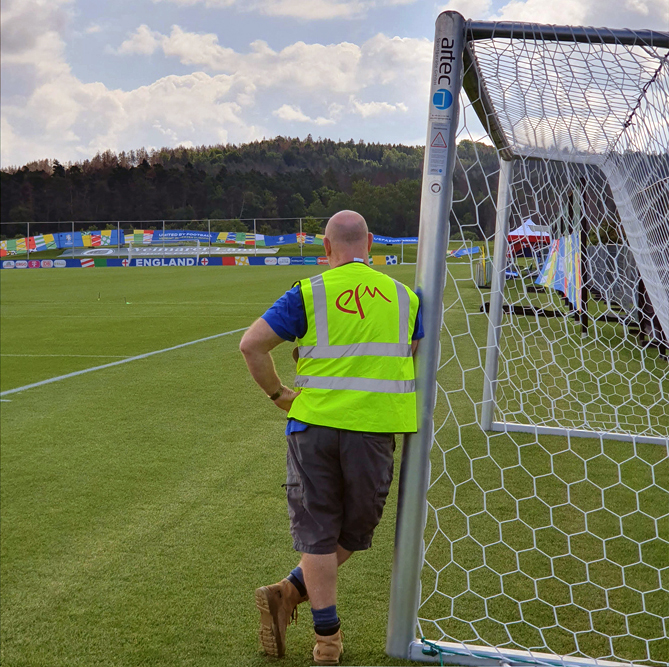
EFM’s Global VP of Sport, Stuart Baker speaks to Inside the Games
Behind every Olympic medal, World Cup final, or championship victory is an unseen force: logistics. As our Global VP of Sport, Stuart Baker, shared with Inside the Games, the “right stuff, arriving at [...]
