

For years, live events – tradeshows, exhibitions, experiential activations – operated with a degree of insulation from financial scrutiny. They were seen as brand moments, relationship drivers, and essential touchpoints. Budgets were protected, outcomes measured loosely, and operational performance treated as secondary to creativity.
In 2026, that era is over.
CFOs are taking a sharper commercial lens to events – and industry data shows why.
1. Event Budgets Are Under New Pressure – And the Numbers Tell the Story
Growth doesn’t mean a free pass. Instead, it has triggered greater budget scrutiny, because:
- Events are now one of the largest marketing line items
- Costs for materials, shipping, production and labour continue to rise
- Companies are consolidating event portfolios to focus on fewer, better-performing experiences
CFOs increasingly ask: “If event budgets are expanding, where is the corresponding return?”
2. Experiential Still Works — But Only If It’s Measurable
Experiential has not lost its appeal. In fact, brands are investing more because experiential formats:
- Deepen engagement
- Increase brand affinity
- Influence purchase decisions
This is supported by analysis showing experiential events can “significantly improve ROI when executed well and measured correctly.”
BUT – and this is the key – leading CFOs and CMOs now expect experiential to be:
- Measurable
- Repeatable
- Tied to commercial outcomes
- Integrated with pipeline data and post-event analytics
Experiential is powerful, but only when delivered with operational excellence and measured with rigour.
3. Hybrid Fatigue Is Real — And It’s Creating a Value Gap
In 2020–2022, hybrid and virtual events surged. But by 2024–2025, a reversal was underway:
- 60% of events are now in-person, with virtual dropping sharply year-on-year
- Marketers report “virtual fatigue” and a shift back to high-impact physical experiences – paired with higher expectations for ROI
More in-person = more operational complexity = more financial scrutiny.
4. CFOs Are Zeroing In on Operational Waste
This is the part of the events conversation no one talks about publicly – but every event director feels:
CFOs now question:
- Why do build delays still happen?
- Why do activations open late across markets?
- Why do logistics failures undermine brand experience?
- Why is the operational cost base unpredictable?
Because these issues are no longer considered “event problems.” They are considered financial inefficiencies.
Sponsors and exhibitors agree. Research shows that consistency and reliability drive renewal, while inconsistent events damage perceived value.
- The Hidden ROI Killer: Poor Logistics and Late Builds
Event leaders know a secret that finance teams are only now recognising:
A late delivery or delayed build quickly becomes:
- Lost footfall
- Missed activation windows
- Wasted sponsorship value
- Reduced lead capture
- Diminished attendee experience
Operational failure can erase ROI before doors even open.
This is why Event Industry News reports that operational excellence is one of the top strategic priorities for 2025–2026, especially for brands investing heavily in exhibitions, global campaigns, and touring experiences.
In other words: Late builds = lost value is not a slogan – it is a financial fact.
6. How Event Teams Can Survive the 2026 ROI Reset
✔ Build ROI-proof frameworks
Lead capture, attribution modelling, pipeline influence, and partner value must be tracked.
✔ Standardise execution across markets
CFOs (and sponsors) demand predictability – not “hope it goes better this time.”
✔ Treat operations as a commercial engine
Flawless logistics, customs certainty, secured timelines, and unified processes directly influence ROI.
✔ Work with partners who reduce execution risk
Event logistics is no longer an operational choice – it’s a strategic one.
The ROI Reset Isn’t a Threat – It’s a Turning Point
In 2026, events must earn their place.
Budgets are no longer protected; they are evaluated rigorously.
The events that thrive will be those that:
- Demonstrate measurable value
- Eliminate operational waste
- Deliver consistent quality globally
- Run with the precision CFOs expect
The message is clear: Operational precision enables ROI. Late builds destroy it.
And the organisations that understand – and act on – this shift will lead the next era of live events.
Explore More Insights:
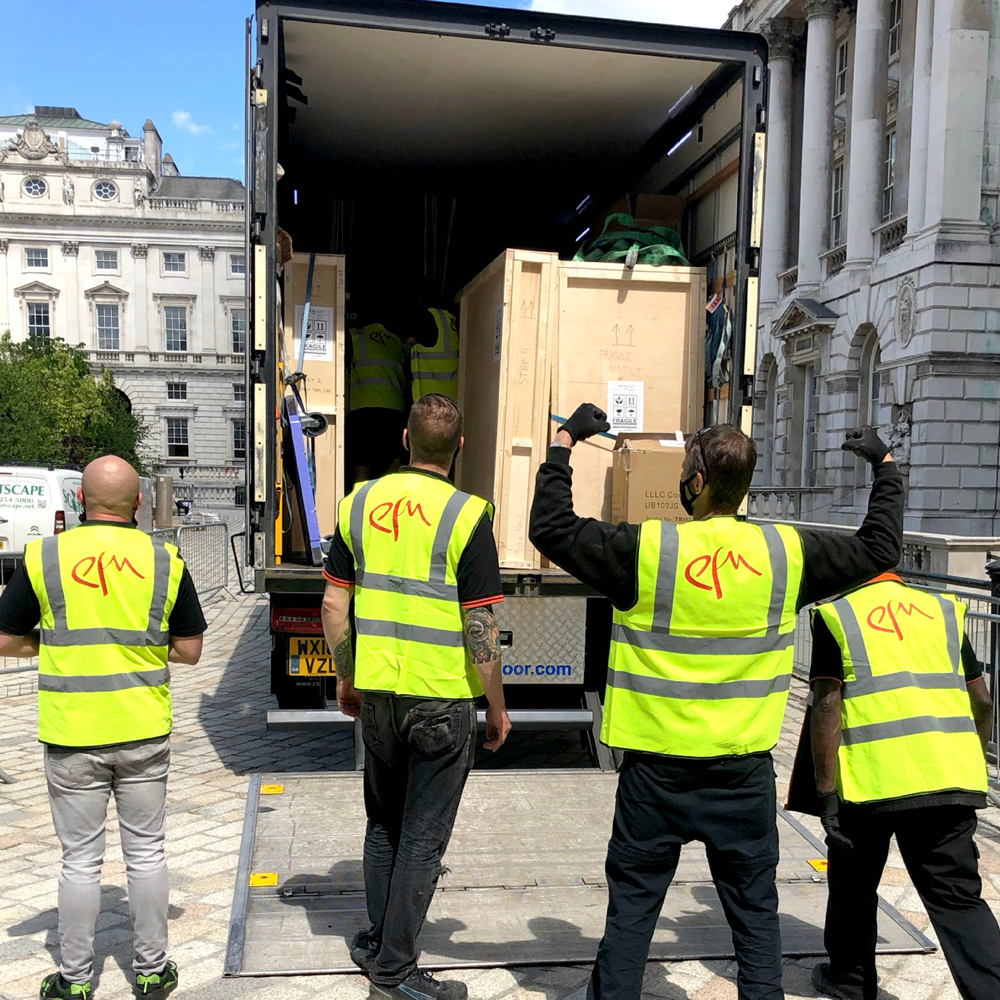
5 Ways To Remove the Stress from Equipment Shipping for Event Suppliers
When you’re moving staging, AV, rigging, or broadcast gear, every shipment carries high stakes. A delayed pallet, customs hold-up, or damaged component can jeopardise an event. At EFM, we’ve made it our mission to [...]

What Is Museum Logistics? An Introduction for Exhibition Teams
Behind every exhibition, whether it’s a single-object installation or a multi-venue global tour, is a complex logistics operation working quietly in the background. For operations managers and logistics coordinators in the museum world, understanding [...]
Carnets for Events: Streamlining Customs for Global Shows
International events, from trade expos to brand activations and touring showcases, demand precise logistics. Whether you're transporting AV gear, demo kits, staging equipment, custom installations or exhibit pieces, clearing customs quickly and efficiently is [...]
